
The Tirukkural, composed by the Tamil poet-philosopher Thiruvalluvar around two thousand years ago, is one of the world's great works of practical wisdom — 1,330 short couplets across three sections: virtue, wealth and love. That a full section (Porul, 'wealth') is devoted to money and its right use tells you how seriously the tradition took it. Read those verses today and they line up almost exactly with modern personal finance. Four ideas stand out.
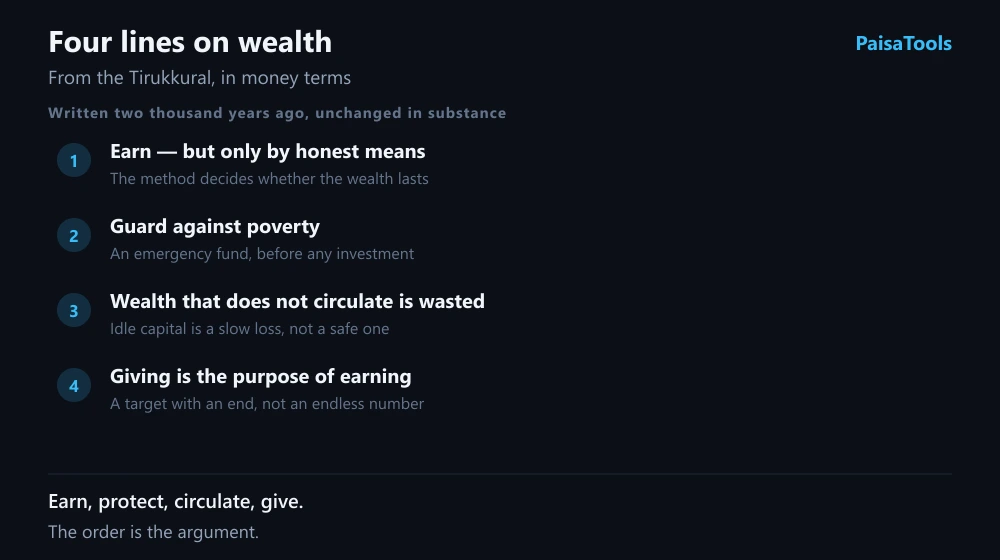
1. Earn wealth — but only by honest means
The Kural is clear that wealth is worth pursuing: it gives a person independence, the ability to help others and to live with dignity. But it draws a hard line — wealth gathered without compassion or by wrongful means brings no lasting good and should be let go. The modern echo is exact: build your earning power and don't apologise for wanting to be financially secure, but make it through honest work and skill, not shortcuts. Money that costs you your integrity is a bad trade.
Try it on your numbersWealth Reality Check CalculatorTrue value of your SIP after inflation + tax (the shock number)2. Guard against poverty — save for hard times
Thiruvalluvar writes with real feeling about the misery of poverty and the wisdom of guarding against it. In practical terms, that is the case for an emergency fund and for not living at the very edge of your income. Hard times — illness, a lost job, a bad year — come to everyone; the person who has set something aside meets them with dignity, while the one who saved nothing is forced into debt or dependence. Building a buffer isn't fear, it's the freedom the Kural prizes.
3. Wealth that doesn't circulate is wasted
A recurring theme is that hoarded wealth, used for nothing and no one, is worthless — like a stagnant pool. Wealth is meant to be used: to live, to help, to keep moving. The financial translation is the same lesson so many traditions arrive at independently — idle money loses value, while money put to work (spent wisely, given, invested) does good and grows. Wealth is a tool, not a trophy to be locked away.
4. Give — it is the true purpose of earning
For the Kural, generosity and helping others is among the highest uses of wealth — arguably its real purpose. This isn't at odds with building wealth; it's the point of building it. In modern terms, a financial plan that includes giving — however small — tends to keep you grounded and clear about why you're accumulating in the first place. Money as a means to a good life and to lifting others, rather than a scoreboard, is a healthier and more durable relationship with it.
SIP Calculator — put honest earnings to workTwo thousand years on, the Tirukkural's money advice needs almost no translation: earn well and honestly, guard against hard times with a buffer, never let wealth sit idle, and give some of it away. Thiruvalluvar packed into a few Tamil couplets what shelves of finance books circle around — that money is a tool for a good and independent life, best earned with integrity and used with purpose.
Read next: 5 money lessons from Chanakya NitiFrequently asked questions
- What does the Tirukkural say about money?
- The Tirukkural devotes a whole section (Porul, 'wealth') to it. Its key money ideas: earn wealth, but only by honest means; guard against poverty by saving for hard times; never let wealth sit idle and hoarded, because unused wealth is wasted; and give generously, which it treats as among the highest purposes of earning. Together they read like timeless personal finance.
- Who was Thiruvalluvar?
- Thiruvalluvar was a Tamil poet and philosopher, traditionally dated to around 2,000 years ago, who composed the Tirukkural — 1,330 couplets on virtue, wealth and love. It is one of the most revered works of Tamil literature and a celebrated guide to ethical, practical living, including the right way to earn and use money.
- Is wanting wealth against Tirukkural's values?
- No. The Kural sees wealth positively — it gives independence, dignity and the means to help others. What it warns against is gaining wealth by wrongful or uncompassionate means, and hoarding it uselessly. The ideal is honest earning, prudent saving against hard times, and generous, purposeful use — very close to modern financial wisdom.