
Chanakya — also called Kautilya — wrote the Arthashastra around the 3rd century BCE, one of the world's earliest treatises on economics and statecraft. His ideas on taxation are surprisingly modern, and they explain a lot about how India taxes you today.
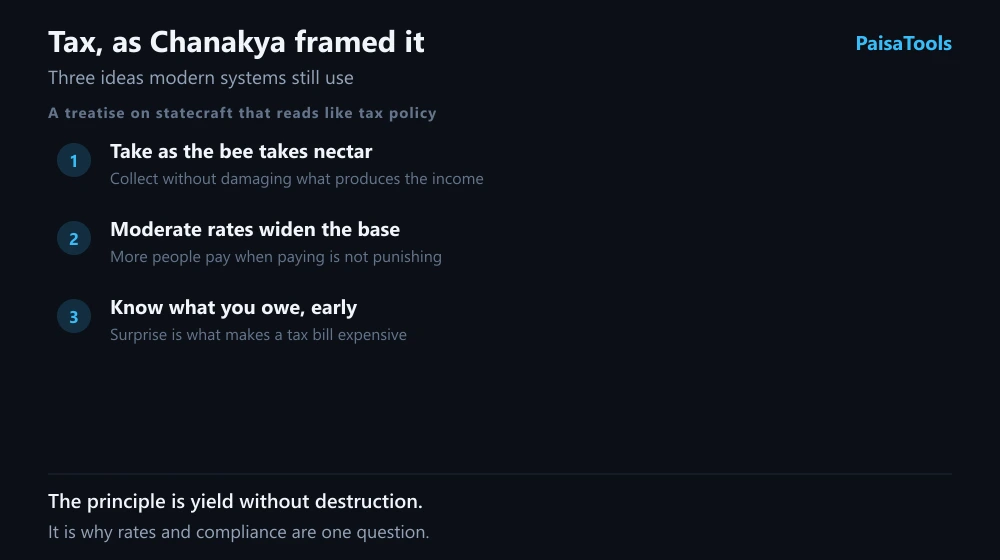
Tax like a bee takes nectar
Chanakya's most quoted image: a ruler should collect taxes the way a bee gathers nectar — taking what it needs without harming the flower. Over-tax, and you kill the source. The new tax regime follows the same instinct: lower rates and a wide zero-tax band (up to ₹12 lakh) to encourage people to pay rather than dodge.
Moderate rates make more people pay
He argued that reasonable, predictable taxes bring in more than harsh ones, because people comply willingly instead of hiding income. That is exactly the logic behind simplifying the tax code and nudging most taxpayers toward the cleaner new regime.
Know what you owe before you owe more
Chanakya prized clarity and record-keeping. The modern version: understand your slab, your ₹75,000 standard deduction and the §87A (section 156 of the new Income-tax Act, 2025) rebate — so you neither overpay nor get a nasty surprise. A ₹12.75 lakh salary pays ₹0 income tax under the new regime, and plenty of people don't realise it.
Income Tax Calculator — know exactly what you oweGood tax thinking hasn't changed in 2,300 years: collect gently, keep it simple, make it clear. Your only job is to know your own numbers.
Frequently asked questions
- Who was Chanakya?
- An ancient Indian teacher, economist and strategist (also called Kautilya) who wrote the Arthashastra around the 3rd century BCE — one of the earliest comprehensive works on statecraft, economics and taxation.
- What did Chanakya say about taxes?
- That a ruler should collect taxes gently and in moderation — like a bee taking nectar without harming the flower — because reasonable, predictable taxes encourage willing compliance and a healthier economy than harsh ones do.