
A SIP invests a fixed amount every month; a lumpsum puts a large sum to work in one go. People argue about which earns more, but they're usually answering two different questions. Let's separate them.
Why lumpsum wins on paper
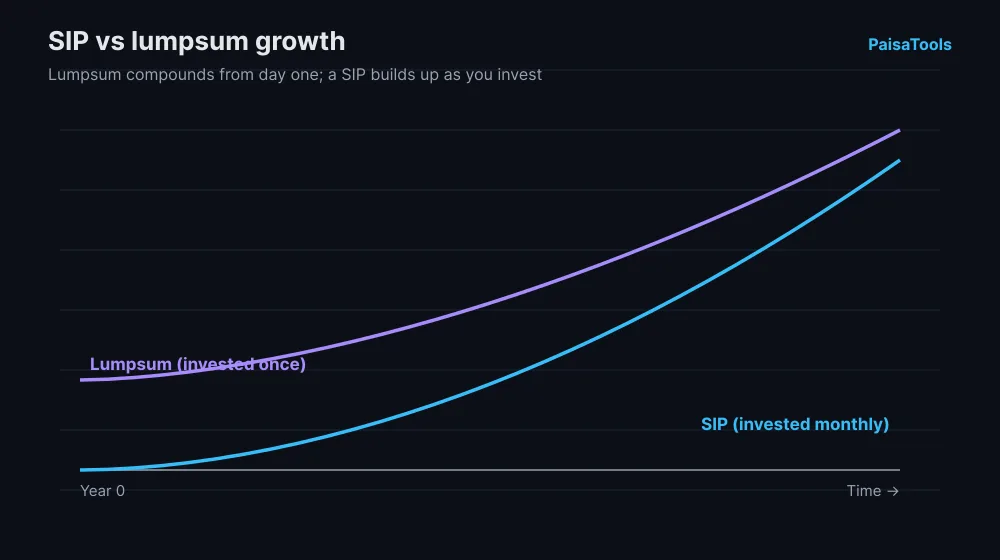
Equity markets rise more often than they fall over long periods. So money invested earlier spends more time compounding. If you have a sum today and a long horizon, deploying it all at once has, on average across history, beaten staggering it in — simply because the average month is an 'up' month, and waiting means sitting in cash that earns less.
Why that's not the whole story
That average hides real risk: if you invest a lumpsum right before a sharp correction, you feel the full drawdown immediately. A SIP spreads your entry across many price points (rupee-cost averaging), so a crash early on actually buys you more units cheaply. SIPs trade a little expected return for a lot less timing risk — and a lot less regret.
The rule that resolves it
- Investing from your monthly salary? SIP. You don't have a lumpsum — you have a monthly surplus, and a SIP turns it into a habit.
- Got a windfall (bonus, maturity, sale proceeds) and a 7+ year horizon? A lumpsum has historically done better — but if a big drop would shake you out, stagger it over 6–12 months (a 'STP') to sleep at night.
- Either way: don't try to time the market. The cost of waiting for the 'right' moment usually exceeds the cost of being early.
See the difference for your own numbers — same total invested, both ways:
SIP CalculatorLumpsum CalculatorFrequently asked questions
- Is SIP better than lumpsum?
- It depends on your money, not just returns. A lumpsum has historically earned a bit more because the average month is an 'up' month, but it carries full timing risk. A SIP spreads your entry across prices, lowering risk and regret — and it's the only option if you invest from a monthly salary.
- Does a lumpsum earn more than a SIP?
- On average across history, yes — money invested earlier spends more time compounding. But that average hides drawdown risk: a lumpsum invested just before a correction feels the full drop immediately, while a SIP buys more units cheaply during the fall.
- Should I invest a bonus as a lumpsum or SIP?
- With a 7+ year horizon a lumpsum has historically done better. But if a sharp drop would shake you out, stagger it over 6–12 months via an STP so you sleep at night. The worst move is waiting for the 'right' moment.